Speakers & Sessions
Raj Ratwani, PhD
Vice President of Scientific Affairs, MedStar Health Research Institute
Director, MedStar Health National Center for Human Factors in Healthcare
Professor, Georgetown University School of Medicine

Raj Ratwani, PhD, is vice president of scientific affairs at the MedStar Health Research Institute, director of the MedStar Health National Center for Human Factors in Healthcare, and a professor at the Georgetown University School of Medicine. He is a nationally recognized leader in improving patient safety and healthcare delivery through better design, technology and understanding of how people think and work in real clinical environments.
Dr. Ratwani’s work focuses on making healthcare safer and more effective by aligning systems, digital tools and artificial intelligence with the realities of clinical practice. His expertise spans patient safety, human cognition, usability, digital health technologies and data science, with a particular emphasis on ensuring that new technologies support – rather than hinder – clinicians and patients.
An active applied researcher, Dr. Ratwani leads multiple large-scale research initiatives supported by federal agencies, foundations and industry partners. His work has been funded by organizations including the National Institutes of Health, the Agency for Healthcare Research and Quality, the Department of Veterans Affairs, and the Pew Charitable Trusts. These efforts have directly informed healthcare policy, regulatory discussions and improvements in frontline clinical care.
Dr. Ratwani has published extensively in leading medical and health policy journals, including the Journal of the American Medical Association (JAMA) and Health Affairs. His research and insights are frequently featured in national media outlets such as Politico, Fortune, Kaiser Health News and National Public Radio (NPR). He has also served on federal advisory committees and has testified before the U.S. Senate on issues related to patient safety and healthcare technology. He holds a doctorate in human factors and applied cognition and completed a National Research Council postdoctoral fellowship at the U.S. Naval Research Laboratory. Outside of work, Dr. Ratwani enjoys spending time with his family, traveling, distance running and playing tennis.
Dr. Ratwani will be presenting...
Artificial Intelligence in Healthcare: Expanding Capabilities, Emerging Risks
 October 27, 2026: 11:30 a.m. -
12:30 p.m. CT | Opening Keynote
Artificial intelligence is no longer a future concept – it is already embedded in clinical documentation tools, patient portal communications and decision-support systems. But what does that mean for patient safety and malpractice risk?
In this session, Raj Ratwani, PhD, vice president of scientific affairs at the MedStar Health Research Institute, will provide a practical, clinician-focused overview of AI in healthcare. Participants will learn what “AI” actually encompasses in today’s clinical environment, examine commonly used tools such as AI scribes and automated messaging systems, and explore the evolving federal policy landscape. Most importantly, we will discuss where safeguards exist – and where they do not.
This presentation will equip attendees with practical strategies to evaluate AI tools, mitigate risk and establish governance structures that promote safe, responsible adoption. Whether you are in a large health system with dedicated AI teams or a smaller practice navigating vendor-driven adoption, this session will provide actionable guidance to protect patients – and your practice.
Learning Objectives
At the conclusion of this learning activity, participants will be able to:
- Define artificial intelligence (AI) in the context of clinical practice and distinguish between generative AI, predictive algorithms and rule-based tools
- Identify common AI applications currently used in healthcare, including AI documentation tools and automated patient communication systems, and describe their potential safety implications
- Discuss current federal oversight frameworks, including the role of agencies such as the U.S. Food and Drug Administration (FDA) and the Office of the National Coordinator for Health Information Technology (ONC), and explain limitations in existing regulatory safeguards
- Recognize patient safety and malpractice risks associated with AI-enabled clinical workflows, including automation bias, over-reliance, documentation errors and workflow integration failures
- Develop a framework for evaluating AI tools and establishing governance structures within their own organizations to support safe implementation, monitoring and accountability
Renee N. Salas, MD, MPH, MS
Founding director, The Cooperative at Mass General Brigham
Lead, Lancet Countdown U.S. Working Group
Co-director, New England Journal of Medicine (NEJM) Group’s Climate Crisis and Clinical Practice Initiative
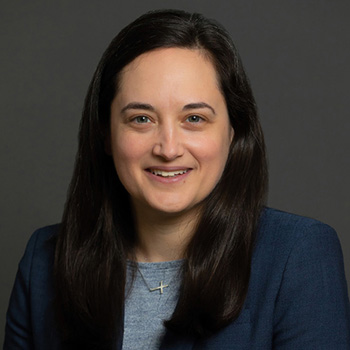
Renee N. Salas, MD, MPH, MS, is an emergency medicine physician at Mass General Brigham and Harvard Medical School and holds a variety of affiliations across Harvard University. She received her doctor of medicine degree from the innovative five-year medical school program to train physician-investigators at the Cleveland Clinic Lerner College of Medicine with a master of science in clinical research from the Case Western Reserve University School of Medicine. Her master of public health is from the Harvard T.H. Chan School of Public Health with a concentration in environmental health.
Dr. Salas is also the founding director of The Cooperative at Mass General Brigham, which is transforming healthcare delivery to strengthen health resilience in a changing environment. Dr. Salas is a member of the global Lancet Countdown, and in 2018 she founded the Lancet Countdown on Health and Climate Change U.S. Working Group in partnership with the American Public Health Association. Today, she serves as leader of the U.S. working group, which includes more than 80 U.S. organizations.
Additionally, Dr. Salas is the co-director of the New England Journal of Medicine (NEJM) Group’s Climate Crisis and Clinical Practice Initiative and served as a guest editor for NEJM Group’s “Fossil-fuel Pollution and Climate Change” series. Dr. Salas was elected to the National Academy of Medicine in 2021 for her work in climate change and health and served as chair of the Climate Change Interest Group and a member of the steering committee for the Grand Challenge on Climate Change, Health and Equity.
Beyond her academic and leadership roles, she serves on the advisory committee for the National Academies Climate Crossroads initiative and on the steering committee for the Action Collaborative on Achieving a Climate Resilient and Sustainable Health Sector. She has won various awards for her work, speaks at high-level engagements across diverse sectors – including testifying before Congress – and engages in research to explore how climate change is impacting the healthcare system. Her work and expertise are regularly featured in media outlets like The New York Times, NPR, Time and The Associated Press.
Dr. Salas will be presenting...
Improving Patient Care & Strengthening Healthcare System Resilience in a Changing Climate
October 27, 2026: 1:15 p.m. - 2:15 p.m. CT
Fossil fuel pollution and the accelerating threats of climate change – such as heat exposure, declining air quality, vector-borne diseases, and extreme weather – are increasingly impacting patient health outcomes, health equity and healthcare delivery. This often-underrecognized reality has profound implications for patient safety and risk management with significant opportunities to improve the quality of care in an era of growing environmental risks. Join Renee Salas, MD, MPH, MS, a widely recognized expert on climate change and healthcare at Mass General Brigham and Harvard Medical School, to learn how climate-related hazards are contributing to patient presentations and healthcare system disruptions. Dr. Salas will provide strategies for reducing risks, improving patient care and strengthening healthcare delivery.
Learning Objectives
At the conclusion of this learning activity, participants will be able to:
- Describe how climate change and fossil fuel pollution worsen health outcomes for patients, exacerbate health disparities and disrupt healthcare delivery
- Identify common climate-sensitive clinical presentations and strategies for incorporating environmental considerations into patient care delivery
- Summarize the healthcare system’s role in reducing patient harm for climate-sensitive diseases and increasing healthcare system resilience
Chad Brouillard, JD
Partner, Foster and Eldridge, LLP
President, Massachusetts Defense Lawyers Association
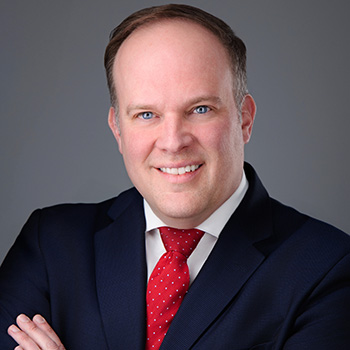
Chad Brouillard, JD, MA, is a partner at the law firm of Foster and Eldridge, LLP in Massachusetts. Brouillard is a medical malpractice defense attorney and healthcare lawyer who has successfully defended numerous cases to trial. In addition to being a trial lawyer, Brouillard was recently on the faculty of Tufts University’s Department of Public Health and Community Medicine as an adjunct instructor for the Health Informatics and Analytics Division and creator of the Information Governance course for healthcare. He is an international speaker on AI liability, EHR liability, AI risks in healthcare, information governance, and healthcare technology liability for continuing medical education, continuing legal education and risk management programs, and has written numerous articles on the same topics.
A longtime member and past president of the Massachusetts Society for Healthcare Risk Management, Chad values the organization’s collaborative approach to improving patient safety, managing risk and supporting the professionals who deliver care. He currently serves as President of the Massachusetts Defense Lawyers Association (MassDLA) and is a frequent writer and speaker on the evolving risks associated with electronic health records, artificial intelligence and other healthcare technologies. He holds licenses to practice law in Massachusetts, New Hampshire, and New York, as well as federal courts, including the United States Supreme Court. In 2023-2026, Attorney Brouillard was recognized as a “Best Lawyer” and “Top Lawyer” in Medical Malpractice Defense in the Boston area.
Mr. Brouillard will be presenting...
From Documentation Fundamentals to Using AI: Risks, Benefits & Best Practices
October 28, 2026: 11:30 a.m. - 12:30 p.m. CT
Effective clinical documentation is fundamental to patient care, communication and risk management. As artificial intelligence becomes increasingly integrated into the documentation process through ambient scribing, diagnostic support, predictive decision-making and agentic AI, longstanding documentation principles remain essential, particularly as new risks and considerations emerge.
Join Chad P. Brouillard, JD, MA, partner at Foster & Eldridge, LLP, for a review of foundational clinical documentation principles and an examination of the opportunities and risks associated with AI-assisted documentation. Beginning with the core principles for creating an accurate, clinically meaningful and defensible record, this session will examine how AI is being incorporated into clinical documentation, as well as the importance of information governance and human oversight. Participants will gain practical strategies for verifying AI-generated content, documenting clinical judgment, addressing disagreements with AI recommendations and maintaining transparency when AI is used in clinical practice. Throughout, the session will reinforce how established documentation principles can guide the responsible use of AI while helping preserve the accuracy, integrity and defensibility of the medical record.
Learning Objectives
At the conclusion of this learning activity, participants will be able to:
- Describe the core principles of effective clinical documentation, including accuracy, completeness, timeliness and documentation of clinical reasoning and decision-making
- Describe current and emerging applications of AI in clinical documentation, including ambient scribing, diagnostic aids, predictive decision support and agentic AI
- Identify strategies for maintaining accurate, transparent, and clinically meaningful documentation when using AI tools, including appropriate human review and documentation of clinical judgment
- Identify key clinical, legal, ethical, privacy and documentation risks associated with AI-assisted charting
- Summarize strategies to mitigate risks related to AI-generated content, templating, copy-and-paste, documentation errors and information governance
Laura J. Zimmermann, MD, MS, DipABLM, FACP
Division Chief of General Internal Medicine at Rush University
Associate Professor of Internal Medicine and Family/Preventive Medicine at Rush University
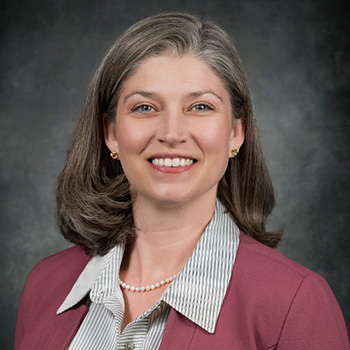
Laura J. Zimmermann, MD, MS, DipABLM, FACP, (she/her), is a primary care internist and lifestyle medicine physician. She is the division chief of general internal medicine and an associate professor of internal medicine and family and preventive medicine at Rush University in Chicago, Illinois. As GIM division chief, she is the academic and operational leader of approximately 45 clinician educators practicing primary care in communities across the Chicagoland area. She also serves as the senior medical director of the Rush Health clinically integrated network (CIN), designing, implementing and driving improvement in the clinician-facing quality program and providing clinician input regarding payer contracts and CIN membership/policy.
Dr. Zimmermann completed medical school, residency and a health services research fellowship at Northwestern University Feinberg School of Medicine and then joined the Northwestern University faculty while building a robust primary care practice at Erie Family Health Center, a federally qualified health center serving Chicago’s near-west side. Since joining Rush in 2016, Dr. Zimmermann has also served as medical director of a multidisciplinary lifestyle medicine clinic and director of preventive medicine for the medical group in which she led successful interdepartmental quality improvement projects in cancer screening, tobacco cessation and diabetes control.
Dr. Zimmermann has authored a number of peer-reviewed publications and national presentations on topics such as behavioral interventions to lower cardiovascular disease risk, social and structural drivers of health, and primary care model innovation.
She lives in Oak Park, Illinois, with her husband, Rob Mitchum, a science and music journalist who is currently the editor-in-chief of Northwestern University Kellogg Business School’s Insight Magazine, and their two sons ages 8 and 14.
Dr. Zimmermann will be presenting...
Setting Your Patients up for Success: Screening for and Addressing Social and Structural Drivers of Health
October 28, 2026: 1:15 p.m. - 2:15 p.m. CT
Nearly 80% of health outcomes are influenced by social, economic and environmental factors rather than medical care alone, making it essential for clinicians to understand and address these drivers in everyday practice. In this session, Laura Zimmermann, MD, will define social determinants (drivers) of health and examine their significant impact on patient clinical outcomes, emphasizing why screening for these factors is essential in today’s care environment.
Participants will explore practical, validated tools and office workflows to support effective screening for social and structural drivers of health in a variety of clinical settings. Dr. Zimmermann will also highlight real-world approaches to integrating screening into routine care without disrupting workflow.
In addition, attendees will learn actionable strategies for connecting patients to community-based resources and support services. By the end of the session, participants will be equipped with practical tools to identify patient needs, address barriers to care and improve overall health outcomes.
Learning Objectives
At the conclusion of this learning activity, participants will be able to:
- Define social determinants (drivers) of health (SDOH)
- Summarize the multidimensional value of addressing SDOH in clinical practice
- Identify validated methods for screening for SDOH
- Summarize practical strategies to address SDOH in any size practice
Carrie Henning-Smith, PhD, MPH, MSW
Associate Professor, University of Minnesota School of Public Health, Health Policy and Management Division
Co-Director, University of Minnesota Rural Health Research Center
Co-Director, University of Minnesota Rural Health Program
Principal Investigator of the NIA-funded Interdisciplinary Network on Rural Population Health and Aging (INRPHA)
President of the National Rural Health Association

Carrie Henning-Smith, PhD, MPH, MSW, is an associate professor in the division of health policy and management at the University of Minnesota School of Public Health, co-director of the University of Minnesota Rural Health Research Center, and co-director of the University of Minnesota Rural Health Program. She is also the principal investigator of the NIA-funded Interdisciplinary Network on Rural Population Health and Aging (INRPHA). She is the current president of the National Rural Health Association and serves on the board of directors for CentraCare, a large, integrated health system serving central Minnesota.
Dr. Henning-Smith holds a BA in international relations and gender studies from Claremont McKenna College; master’s degrees in public health and social work, along with a certificate in gerontology from the University of Michigan; and a PhD in health services research with a minor in demography from the University of Minnesota. Her research focuses on rural population health and health policy, with a particular emphasis on aging, social well-being and mental health.
Dr. Henning-Smith will be presenting...
Aging in Rural America: Meeting the Unique Needs of Rural Older Adults
October 29, 2026: 11:30 a.m. - 12:30 p.m. CT
Rural communities face unique challenges when it comes to supporting the health and well-being of older adults. In this presentation, Dr. Carrie Henning-Smith will explore the rural-urban differences in health and healthcare outcomes among adults age 65 and older, highlighting the heterogeneity among this population. Attendees will learn about the complex factors that shape health outcomes for older adults, including social drivers of health, risk factors and health-promoting assets in rural communities. Finally, Dr. Henning-Smith will share practical strategies to support and promote good health and quality of life among rural older adults. Participants will leave with a deeper understanding of aging in rural settings and actionable ideas for promoting resilience, health and well-being among older adults in these settings.
Learning Objectives
At the conclusion of this learning activity, participants will be able to:
- Describe rural-urban differences in health and healthcare access among older adults
- Develop an understanding of factors that contribute to rural older adults' health outcomes
- Identify strategies to support the health of aging rural adults
Will Bynum, MD, PhD
Adjunct Professor of Family Medicine at Duke University School of Medicine
Co-founder and co-director of The Shame Lab

Will Bynum, MD, PhD, is an adjunct professor of family medicine at Duke University School of Medicine and a nationally recognized expert on shame in healthcare. A U.S. Air Force veteran, practicing family physician and PhD-trained researcher and educator, his work spans frontline care, medical education and organizational leadership.
Dr. Bynum is co-founder and co-director of The Shame Lab, which advances shame competence across healthcare and other professional settings. His research examines how shame shapes learning, behavior and patient safety, and has been published in leading journals including Academic Medicine, NEJM and The Lancet. He is a leading voice in applying shame competence to improve clinician well-being and healthcare system performance, integrating research, leadership and narrative approaches to address the hidden emotional drivers of risk.
Dr. Bynum will be presenting...
From Error to Exposure: How Shame Drives Risk in Healthcare
October 29, 2026: 1:15 p.m. -
2:15 p.m. CT | Closing Keynote
Shame is a powerful yet often unrecognized force in healthcare, shaping how clinicians respond to error, communicate with colleagues, and engage with safety systems. Drawing on original research on shame in medical education and practice, this session explores how shame operates not only within individuals, but across teams and organizational structures – often driving risk in ways that remain hidden.
Through a combination of personal narrative, visual art and evidence-based insights, Will Bynum, MD, PhD, invites participants to examine the emotional undercurrents of clinical work and their impact on patient safety. Attendees will gain a deeper understanding of how shame influences behavior and leave with practical strategies to recognize and engage with it more effectively – helping to foster safer, more responsive and more humane healthcare environments.
Learning Objectives
At the conclusion of this learning activity, participants will be able to:
- Define and differentiate shame from related emotional responses in the context of medical error
- Describe the distributed nature of shame across individuals, teams and systems in healthcare organizations
- Summarize how shame influences behavior, communication and responses to error
- Apply practical strategies to recognize and engage shame at individual, team and system levels to improve patient safety and clinician well-being